By Victor Topouria, Managing Partner
Whose truth?
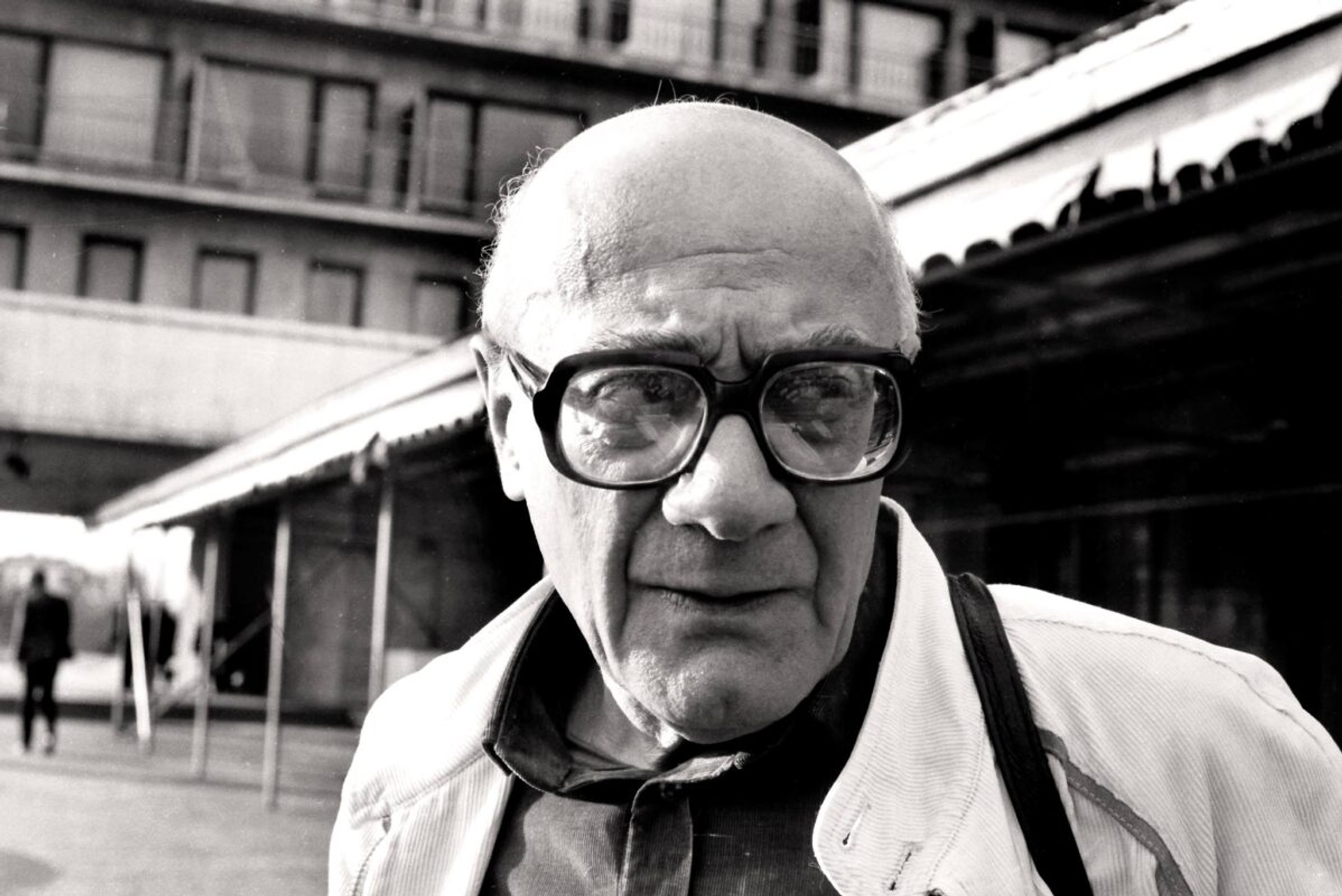
The most consequential sentence that Georgian philosopher Merab Mamardashvili ever uttered in his life was ‘Truth stands higher than homeland’. He said this during a speech in front of the 1989 party convention of the People’s Front, one of the many newly-formed nationalist parties that had emerged in the Georgian SSR at the height of the Glasnost period leading up to the collapse of the Soviet Union. His words were quickly rebutted by a ‘How dare you?!’ from an impassioned member of the audience, after which the order of proceedings deteriorated as more hecklers emerged and drowned out the scattered claps of support in the auditorium.
The incident proved to be a fateful moment for Mamardashvili as it determined the general attitude toward him in Georgia thereafter. A populace captivated by nationalist euphoria quickly labeled him a traitor, that is someone who sold out his country in exchange for ‘truth’, a word that had become devoid of any real value given the cynicism of the average citizen who was a daily witness to the degenerating charade that was late Soviet life.
Moreover, the ‘truth’, as most Soviet citizens were taught to understand, had always been readily available for anyone who was willing to sit down and familiarise himself with Communist Party doctrine. It was cheap. ’Homeland’ on the other hand, that is a sovereign nation-state for Georgians, was something that almost everyone thirsted for, a dream that had evaded them for generations.
The rupture
The collective memory of the short-lived Democratic Republic of Georgia—established in 1918 by Georgian Mensheviks following the Bolshevik Revolution but forcibly annexed by the Soviet Union in 1921 —served as a rallying cry for the independence movement in the late 1980s, but it was not until April 9, 1989, when the Soviet Army killed 21 peaceful protestors in Tbilisi, that the National Liberation Movement became the dominant force in Georgian political life.
It was in this charged atmosphere that Mamardashvili, who had spent his career as a professor of philosophy at Moscow State University and worked exclusively in the realm of philosophy of mind, addressed his countrymen directly through lectures at the Georgian Academy of Science while also stepping into his duty as a citizen, participating in public affairs, and adding a political dimension to his philosophical thought.
Over three decades later, his famous line has returned to mainstream public discourse in Georgia, perhaps because it so well encapsulates the dilemma that is faced by the independent republics that endured Soviet rule, the lingering shadow of which people are still unable to escape.
Post-Soviet dilemma
The difficulty of reconciling national liberation with universal truths presents itself as a central problem in the process of decolonization and the struggle for self-determination. For citizens in post-colonial and post-totalitarian countries, resolving this dichotomy is a critical step toward delineating where subjugation ends and emancipation begins. However, the colonialist forces working against its resolution are even stronger than they were immediately following Soviet collapse. The center of gravity for this phenomenon is of course Russia.
The manifestations are obvious: dictatorial rule of a Tsar-like figure, a depoliticized and passive society debilitated through ideology and fear, widespread cynicism and low value for human life, imperialist aggression against its neighbors and occupation of their sovereign territories.
These phenomena are not much different than they were for most of Russian history or from the Stalin era in which Mamardashvili grew up and began to develop his philosophy. Thus, this essay takes the axiom—‘truth stands higher than homeland’—as a starting point for analysis and look at the forces that shaped Mamardashvili’s thinking during his career in Moscow to address the question: ’How did experiences in the imperial metropole shape ideas of post-colonial citizenship?’
Ideology as suitability
Mamardashvili’s mode of thought emerged as a response to the oppressive ideological circumstances of the Stalin and post-Stalin eras. By his own description, there was no such thing as philosophy in the Soviet Union, at least not in any way that was independent of the ideological apparatus of the state.
Amongst his colleagues at Moscow State University, the typical experience was to take Marxism-Leninism as the starting point and walk along the deterministic path of dialectical materialism. Of course, there would come the inevitable clash with reality that caused disillusionment with the perceived distortion of ideals, at which point, any critical attitudes that developed would always lead back to questions of how to restore the purity of Marxist-Leninist theory.
This ideological loop was preserved by people who were unable or unwilling to distinguish purity of ideals from their own self-interest because preserving this structure of thought also preserved their own material well-being.
For Mamardashvili, this is the most significant feature of ideology: ‘The voice of ideology is that which hangs precisely upon that which suits us, that which suits our body that has assimilated to a certain way of life… the sound of that which suits me is not my own voice. […] But it is difficult to discern this because we think and recognize and act according to those things which are comfortable for us, which suit us, and which will save us from that situation where we must dare to see reality.’
‘Atypical experience’
With the Khrushchev Thaw and De-Stalinization, the professional philosophers whom Mamardashvili talks about continued their intellectual activities with the renewed purpose of correcting those distortions of ideals and advancing progress within Marxism. This was in line with Khrushchev’s new approach to building communism ‘in the main’ by 1980, which meant that many of Mamardashvili’s colleagues found appointments to newly-created idealogical posts within the party apparatus.
What Mamardashvili refers to as his ‘atypical experience’ in this ecosystem is his disinterest in following along this path and his disinterest in the ideals which others had bequeathed from the revolution. As he puts it, he had neither the ambition to improve Marxism nor the ambition to improve society.
Revolutionary dispositions toward life are tied to ideology, and a deterministic ideology at that, whose conception of history is the movement in the direction of inevitability. Mamardashvili equates such ideological dispositions to ‘sleep’, ‘death’ and ‘passivity’ wherein causation is attributed to things in humans that are not humane, that is, determinant of a natural and material world which is alien to the essence of our inner conscience.
Forms and contents
The topological approach to philosophy that he articulates is one that arrives to this essence, or truth, by changing the topological structure, or the form, of thought rather than the information, or the content, of the thought. The mind-bending abstractness of this approach is self-evident, but thankfully the descriptions of its methodology are beyond the scope of this paper. The implications of it are relevant, however: ‘If we are talking about conscience, we are talking about that which is given intrinsically and for which there is no empirical foundation. Thus, there is no proletarian conscience or bourgeois conscience. […] To remain within the essence of conscience requires attention and strain, the effort to gather oneself in totality.’
On the Kantian foundation of essence, Mamardashvili rebuts the Marxist notion of class conscience while also putting emphasis on a key element of his own philosophy—‘effort’. That is effort in the classical, heroic sense (think labours of Hercules), where an individual arrives at insight by way of concentrated labor of thought, remains inside of his essential experience, and then merges himself with a conduit (a labour, a craft, or a symbol) that allows him to realize this experience in the world, and therefore in its completeness.
This is what Mamardashvili calls the phenomenology of an ‘event’, the experience of which elevates a person from living in nature to living in history. This spiritual hero is liberated from ideology and acts independent of deterministic circumstances in the world around him. He is the real embodiment of freedom, vitality, truth, agency and completeness. In the next section, this model is placed within a post-colonial, post-Soviet and post-secular context, wherein ethnicity, nationality and religious symbolism become a dimension of analysis.
Russia-Georgia entanglement
During the years that he spent in Moscow, Mamardashvili maintained a somewhat mythic conception of Georgia in his imagination. He believed his country to be fundamentally antithetical to Russian-Soviet society and perhaps immune to the detrimental ideological forces that haunted the Russian mass mentality. But his repatriation in 1981 shattered this myth: ’For thirty years I lived and believed that we Georgians are not as ignorant as Russians. […] I returned and realized that this was an illusion, that the process of mental, psychic, linguistic decay was too far gone.’
In one of his lectures, Mamardashvili cites the Russian philosopher Vasily Rosanov’s summative life work, titled Apocalypse of Our Time (1919)—which Rosanov wrote at the height of the post-revolution Civil War in a state of destitution and hunger that ultimately led to his death—and relays that:
‘…in Russian culture exists a certain force—and it was precisely this force that brought about this [apocalypse]—that is a constant anticipation of some sort of salvation from the outside, […] that is founding everything else upon the extent to which an outside force will help me, save me, rather than filling the space and time of my life with my own effort, in order to create within myself something for which I am able to respect myself. […] You all know the extent to which this disrespect was widespread in the tens and twenties of this century, and which later on was established as the supreme trait of the Soviet mentality and Soviet system. To the same extent, this trait also established itself and caught on amongst us, amongst Georgians.’
This is at the core of what Mamardashvili refers to as a ‘damaged relationship with life’ and an internal sense of incompleteness that defines Russian people and, thus, Homo sovieticus as their derivative. It is a circumstance where the topological structures of thought, that is the ideology, which are active within the mentality of the colonial power is transposed upon that of the colonial subject. This phenomenon is perhaps the most lasting imprint of Soviet rule. However, he stops far short of ethnic determinism (i.e. racism) for such circumstances.
On the contrary, Mamardashvili puts forward the notion that perhaps the greatest victims of colonialism are the Russian people themselves, for their minds are colonized by an imperial ideology wherein the price of being dominated is the permission to dominate others. It is ‘not an empire of Russian people but an empire by means of Russian people’. Thus, long after Lenin and Stalin, we continue to ‘see millions ready to give themselves lovingly to the same force.’
From subject to citizen
Moving further, we bridge the gap between the individual conscience and the public realm of political participation—from the thinking subject to citizen. As Nemtsev and Faybyshenko note, political aspects of Mamardashvili’s philosophy ‘emerged out of his “social metaphysics,” as applied to the general problem of individual self-determination,’ and what brings this metaphysics into the the realm of politics is the criterium of ‘publicity’. Publicity is what makes the ‘event’ (described earlier), compatible with law and ethics. This means that the realization of an event in the public realm brings a subject’s essence out of the ‘realm of shadows’ and into the open common space (res public) of political participation.
By this measure, citizenship becomes the individual’s heroic effort to come into absolute consciousness of freedom, merge himself with a universal symbol and bring his experience into completeness in the world. In the Georgian national context, Mamardashvili establishes that the Christ symbol is the conduit through which the thinking subject is connected to the universal. This is not a theological statement but a stand-in for the universality of essential truth.
This symbol is what liberates the thinking subject from the determinism of his body and allows him to live in history and not in nature, and by the same measure, live in history and not in an ethnos. ‘For if we Georgians are a Christian nation, that means we are the sum of personalities who in their Georgian ethnic body completed these spiritual acts and thus were born as a nation and not as an ethnos.’
By the same means, the Georgian nation connects with the universal community of other nations, those which emerged as a nation by merging themselves with the Christ symbol—that is European nations. Through this logic, Mamardashvili reconciles the national with the universal, bringing him to his fateful conclusion—‘truth stands higher than homeland’.
‘Citizen of an unknown country’
Mamardashvili died of a heart attack at the age of 60 on November 25, 1990, several months shy of Georgia declaring its independence from the USSR on April 9, 1991. Today we look to him not only to understand his philosophical thought but also his personal experiences so that we may gain a normative ideal for a model of emancipated citizenship. What makes him a profound figure is that he lived the entirety of his life in the totalitarian ideological darkness of the Soviet Union and died before he could witness its demise, yet he embodied that which constitutes the heroic post-Soviet citizen ideal.
His freedom was independent from the empirical, ideological or legal nature of the state under which he lived. Rather, Mamardashvili compared the philosopher to a spy and referred to him as a ‘citizen of an unknown country.’ Ultimately, his story is a tragic one, that of a man who never found a sanctuary in his homeland and to a large extent remains misunderstood there.
His disposition about the painful topic of his country is best summarized by what he wrote in the preface to his last published work, a compilation of his lectures on Proust’s À la recherche du temps perdu: ’We belong to each other and this will never happen. I am Georgian and I never was.’