By Brynn Smith, Founding Partner
Wars are often framed as the inevitable outcome of forces already in motion, shaped by pressures and threats that leave no room for alternative action. In Russia, this framing has become the dominant way of understanding crisis. Over time, this shifts from explanation to limitation, restricting how events are questioned, understood, or resisted. In December 2022, Putin insisted that he wanted this war in Ukraine to end and yet in 2026 it wages on. According to Putin, it’s actually the West who started the war and is forcing it to continue; this war is something that happened to Russia, not something they chose. Faced with an aggressive, hypocritical West using Ukraine as a proxy, they had no alternative but to invade. The war was inevitable and determined by forces greater than them. Putin can’t do anything, the rest of the government can’t do anything, and you certainly can’t do anything. So who can?
No one, and that’s the point. Exercising power sometimes consists of controlling and shaping the structure of what is possible in terms of other actions. This is the exact approach that Putin and his regime have taken to ensure that their citizens remain as passive, uninterested, and compliant as possible during their invasion into Ukraine. Power, in this context, does not rely solely on coercion and instead it operates by quietly redefining the boundaries of possibility. When the space of alternatives is systematically compressed, obedience is not necessarily a result of believing but is oftentimes a logical adaptation to a landscape in which other options seem inaccessible.
The idea of crisis as destiny within Russia is not a new concept and has been deployed many times especially in the Soviet Union to limit agency during difficult times. Both their invasion into Afghanistan and the Chernobyl disaster are stark examples. For Afghanistan, the regime’s narrative framed the conflict as a just, heroic, and necessary war. Thousands of citizens volunteered to go fight in Afghanistan only to discover that what their government was telling them did not match the horrific reality of what was actually happening. One veteran explained to Belarussian author Svetlana Alexievich in her oral history Boys in Zinc, “how did I end up here? It’s very simple. I believed everything they wrote in the newspapers.”
Similarly with Chernobyl, the Soviet authorities framed the man-made disaster as an unfortunate but unavoidable tragedy that occurred due to reasons that did not need to be discussed or investigated. Citizens were mobilised through narratives of sacrifice and heroism while accountability was all but forgotten. Firefighters and clean-up “volunteers” were celebrated as patriots fulfilling a historic duty, while systemic failures were obscured behind appeals of unity and resilience. The narrative was clear: this was a moment for obedience and questioning was not welcome. In casting disaster as destiny, the regime narrowed the space for agency, encouraging passivity by presenting events as beyond the reach of individual influence or political change.
Modernisation of regime narrative
The same approach is being taken today with the war in Ukraine, only it is more sophisticated, more layered, and far more pervasive. The state constructs an environment in which alternative interpretations gradually lose visibility. Independent outlets such as Echo of Moscow and Dozhd were shut down or pushed into exile within days of the invasion. The 2022 “fake news” laws introduced prison sentences of up to fifteen years for reporting that diverges from official Ministry of Defence statements. The terminology itself is regulated such as describing the invasion as a “war” rather than a “special military operation” can result in prosecution. When language is tightly managed, the range of publicly expressible thought narrows with it, and political debate contracts accordingly.
Responsibility is also redistributed in ways that dilute individual agency and take a more deterministic approach. Mobilisation is framed as limited, necessary, and heroic; economic hardship is attributed to Western sanctions; battlefield developments are filtered through official briefings that emphasise strategy and control. After protests followed the February 2022 invasion announcement, thousands were detained, and state media characterised demonstrators as influenced by foreign interests. These actions combine legal enforcement with narrative framing to shape behaviour. The environment signals that participation in opposition carries high personal risk while offering little expectation of systemic change.
The digital sphere reinforces this structure. Platforms such as Facebook and Instagram were restricted, Western news sites blocked, and domestic search engines prioritised state-aligned sources. At the same time, patriotic symbols such as the “Z” insignia, Victory Day imagery, and school programmes on “traditional values” circulate widely across public and educational spaces. Through repetition and saturation, these signals normalise war as part of regular life. Political possibility and individual opinions become compressed into a narrow channel of approved positions. Within that environment, passivity emerges as a logical adaptation to the constraints that have been carefully put in place.
Weary but still obedient
It is not that citizens are naive. They understand that their agency is constrained by the regime and that state-controlled media often distorts the truth. However, the alternatives are perceived as so futile and exhausting that meaningful resistance feels pointless. Over time, this sense of inevitability has hardened into a deeply embedded narrative of determinism which has become normalised. When political outcomes, whether its electoral results, neutralisation or imprisonment of opposition figures, or constitutional changes that further entrench executive power, are constantly framed as fixed and unchangeable, disengagement becomes rational. The result is not ignorance but depoliticisation. It leads to a population that is aware of its constraints yet increasingly detached from the belief that participation can change them.
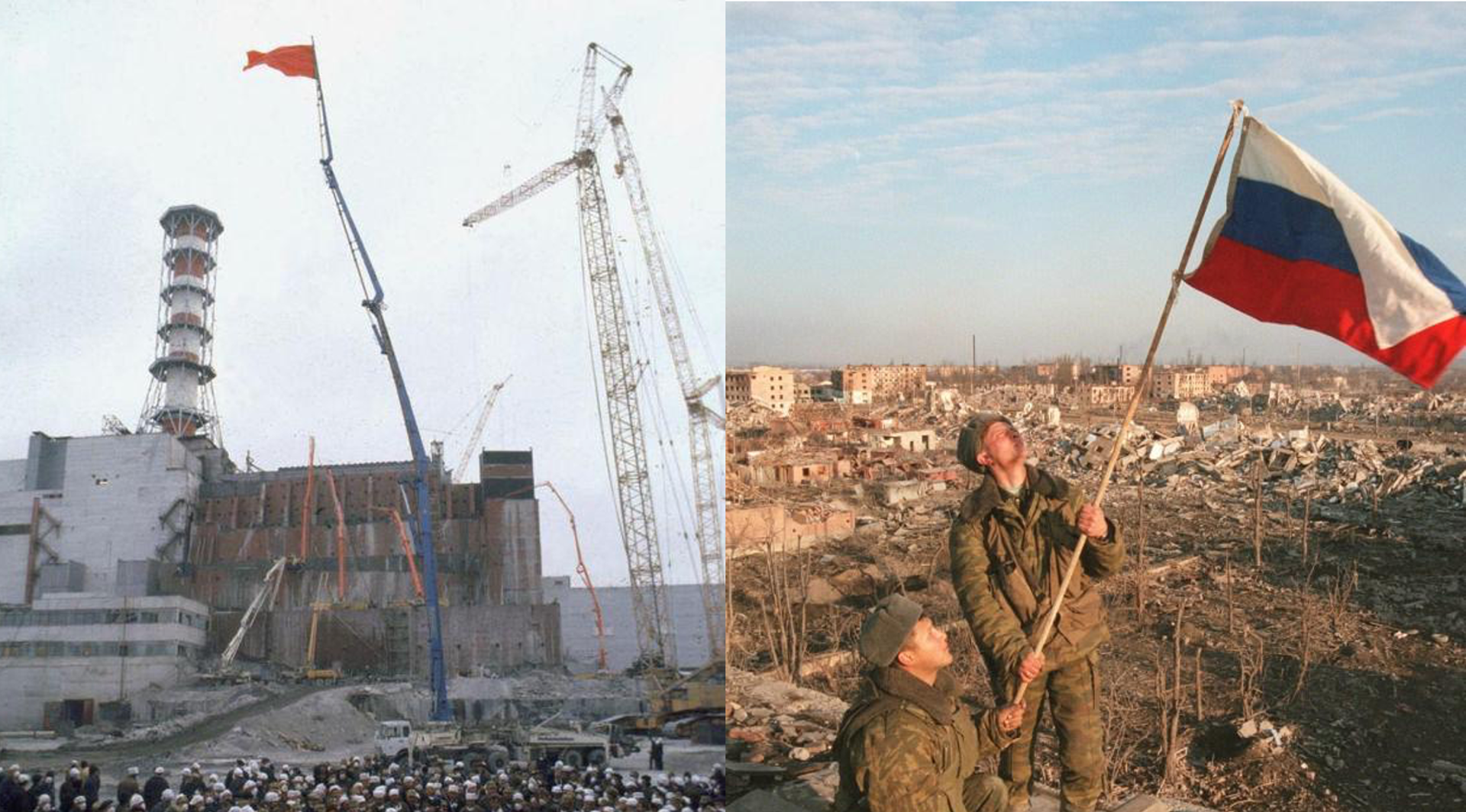
This mindset is vividly captured in Alexievich’s oral history Voices from Chernobyl. In one account, a Chernobyl clean-up worker reflects on the surreal symbolism of repeatedly raising the Soviet flag over the contaminated reactor:
(J)ust four days after the catastrophe the red flag was already flying over the fourth reactor. It blazed forth. In a month the radiation had devoured it. So they put up another flag. And in another month they put up another one. I tried to imagine how the soldiers felt going up on the roof to replace the flag. These were suicide missions. What would you call this? Soviet paganism? Live sacrifice? But the thing is, if they’d given me the flag then, and told me to climb up there, I would have. Why? I can’t say.
He explains an internalised fatalism in which obedience no longer needs justification and persists despite clear awareness of danger. The state’s insistence on symbolic victory (seen here as “defeating” radiation) coexists with an implicit understanding that the task is irrational, yet the absence of perceived alternatives renders compliance inevitable. His fate, in his own words, seems determined not by personal choice but by what the state demands of him.
As already discussed, this pattern has not disappeared. In contemporary Russia, major political developments are similarly framed as unavoidable responses to external pressures rather than discretionary policy choices. Citizens may privately doubt official narratives, but the perceived costs of opposition being legal risk, social isolation, economic insecurity, or exile renders resistance both dangerous and exhausting. As a result, obedience persists because agency feels structurally constrained and the effort required to challenge the system appears overwhelmingly futile.
Potential paths forward
Yet this analysis also reveals something crucial: if narrative can be used to constrict agency, it can also be used to restore it. Power operates through the structuring of possibility, and narrative is one of its most effective tools. When the state repeatedly presents events as predetermined or externally imposed, it narrows the range of imaginable alternatives. But when individuals and communities articulate their own interpretations such as when they reframe events as debatable and politically constructed they reopen that space. Agency can be reclaimed through the ability to name circumstances and situations differently. Narrative can also function as a tool of independence. To construct an alternative narrative like describing war as war, corruption as corruption, and political consolidation as choice rather than fate is to reassert that history is made by decisions, not destiny. This does not immediately dissolve structural constraints, nor does it eliminate risk. But it disrupts determinism and in turn allows for some agency. By reclaiming the language through which events are understood, individuals reclaim the conceptual space in which action becomes imaginable. Agency, then, is exercised through protest and participation, but it begins with interpretation. In resisting imposed inevitability, narrative becomes the foundation of autonomy.